Exhibitions
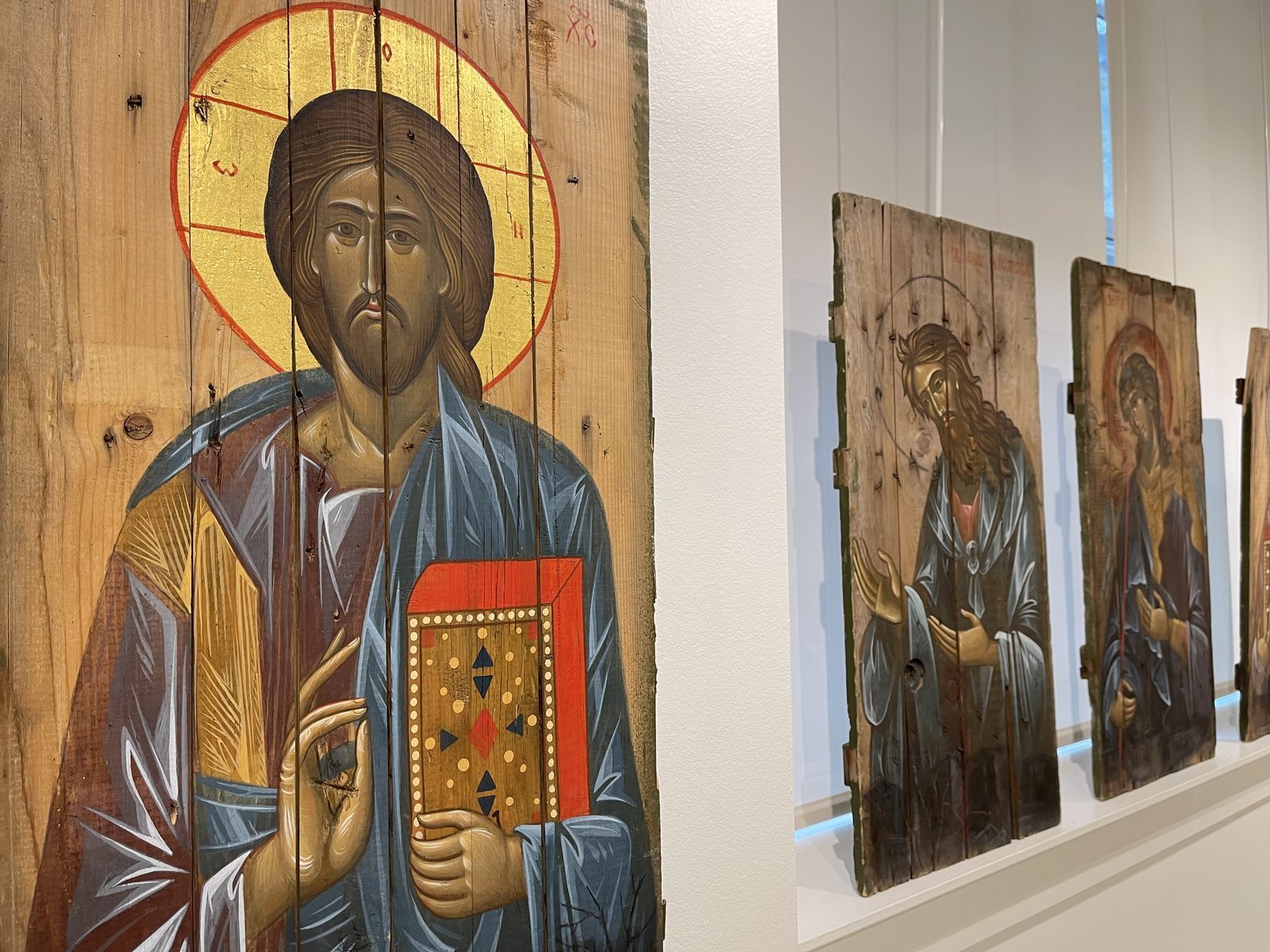
Refuge Gallery, Fordham University, New York, USA
Contemporary Ukrainian Christian art made under Russia's full-scale invasion. At its center stood Icons on Ammo Boxes by Sofia Atlantova and Oleksandr Klymenko, who paint sacred images on the wooden lids of ammunition crates abandoned by Russian forces — among them the Mariupol Deisis — with proceeds funding medical aid in Ukraine. The first showing, at the Sheen Center in Manhattan (2023), set these icons alongside the calligraphy of Oleksiy Chekal, the gouaches of Yurii Khymych, and works by Anna Ravliuc; the second, at Fordham University's Refuge Gallery (2024–2025) under the title Wartime Beauty, was given to icons alone.
- Religion Unplugged — “Beauty During Wartime: Ukrainian Artists Display Resilience and Faith”
National Art Museum of the Republic of Belarus, Minsk, Belarus
Valamon luostari, Heinävesi, Finland
Kuzbass Museum of Fine Arts, Novokuznetsk, Russia
Yeltsin Center, Ekaterinburg, Russia
Contemporary icons of the Western saints venerated before the schism of 1054 — figures still honored by the Orthodox and Catholic churches alike. The project gathered some 120 icons by iconographers from fifteen countries and, over several years, travelled from its premiere at the National Art Museum of Belarus in Minsk (2017) to the Valamo Monastery in Finland, Novokuznetsk, and the Yeltsin Center in Yekaterinburg (2021).
- Blagovest-info — «Предпоказ выставки икон „Святые неразделенной Церкви“ состоялся в Москве»
- Blagovest-info — «В Минске открылась первая выставка „Святые неразделенной Церкви“»
- Blagovest-info — «Церемония гашения почтовых марок с иконами „Святые неразделенной Церкви“ состоялась в Минске»
- Lenta.ru — «В Екатеринбурге открылась выставка современных икон»
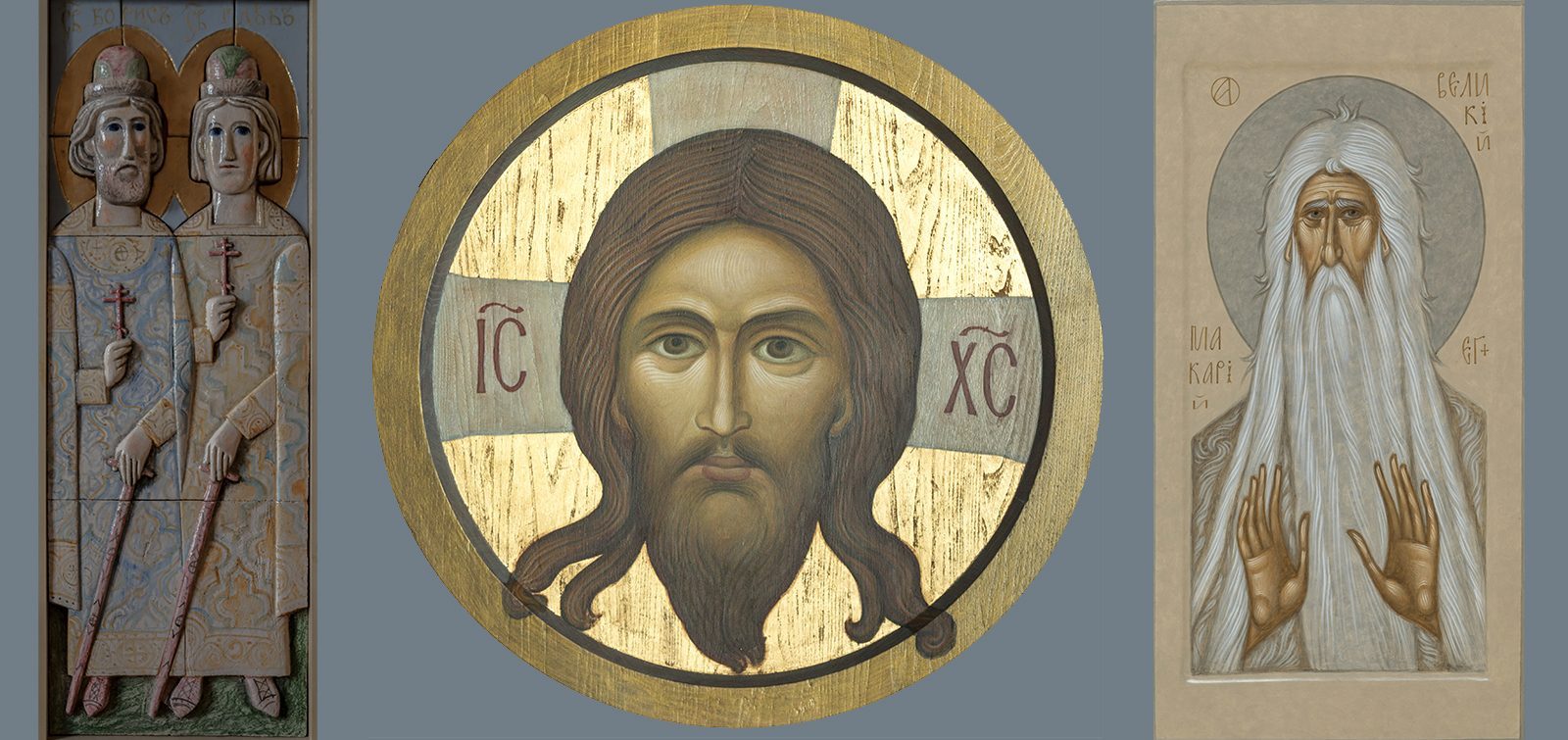
Contemporary Orthodox icons from Russia, Ukraine, Belarus, and beyond, shown in the former sacristy of the Collège des Bernardins during the January week of prayer for Christian unity. Under the Russian title За жизнь мира, the exhibition set out to present icon painting not as a petrified tradition but as a living space of spiritual and artistic search.
- Artos Fellowship — «„За жизнь мира“. Выставка современной православной иконы»
Contemporary Christian art on the theme of the Nativity — painting, sculpture, and ceramics rather than icons alone — gathered in central Moscow across the Christmas season, bringing established artists together with younger names.
Tambov Regional Museum of Local Lore, Tambov, Russia
Subtitled Contemporary Icon Painters of Russia and Belarus, the project brought together current Orthodox iconography from both countries. It was shown in Bryansk, at the Museum of the Tkachev Brothers within the Slavic arts festival there, and in Tambov.
A photographic project by Vladimir Orlov, drawn from the monastic republic of Mount Athos — its churches, its landscape, and the daily rhythm of ascetic life. Shown at the Aleksandrovskaya Sloboda museum-reserve.
The first large-scale exhibition of contemporary icon painting, organized by the Artos Fellowship together with Valaam Monastery. Around a hundred works by some sixty living iconographers — more than half shown in public for the first time — filled the Tsarskaya Bashnya gallery in Moscow's Kazansky station, gathered as the seed of a planned icon museum at Valaam.
A pairing of two artists who speak a contemporary language while staying close to the icon tradition: the religious portraits of Alla Ponyatovskaya and the panel sculpture of Sergei Nekrasov. Its title, Svetolitie — a coinage on svet, ‘light’ — takes its cue from the Gospel: “if your eye be light, your whole body will be full of light.” Shown in the exhibition hall of the Dormition Cathedral at the Aleksandrovskaya Sloboda museum-reserve.
- Art-Release.rf — Exhibition announcement
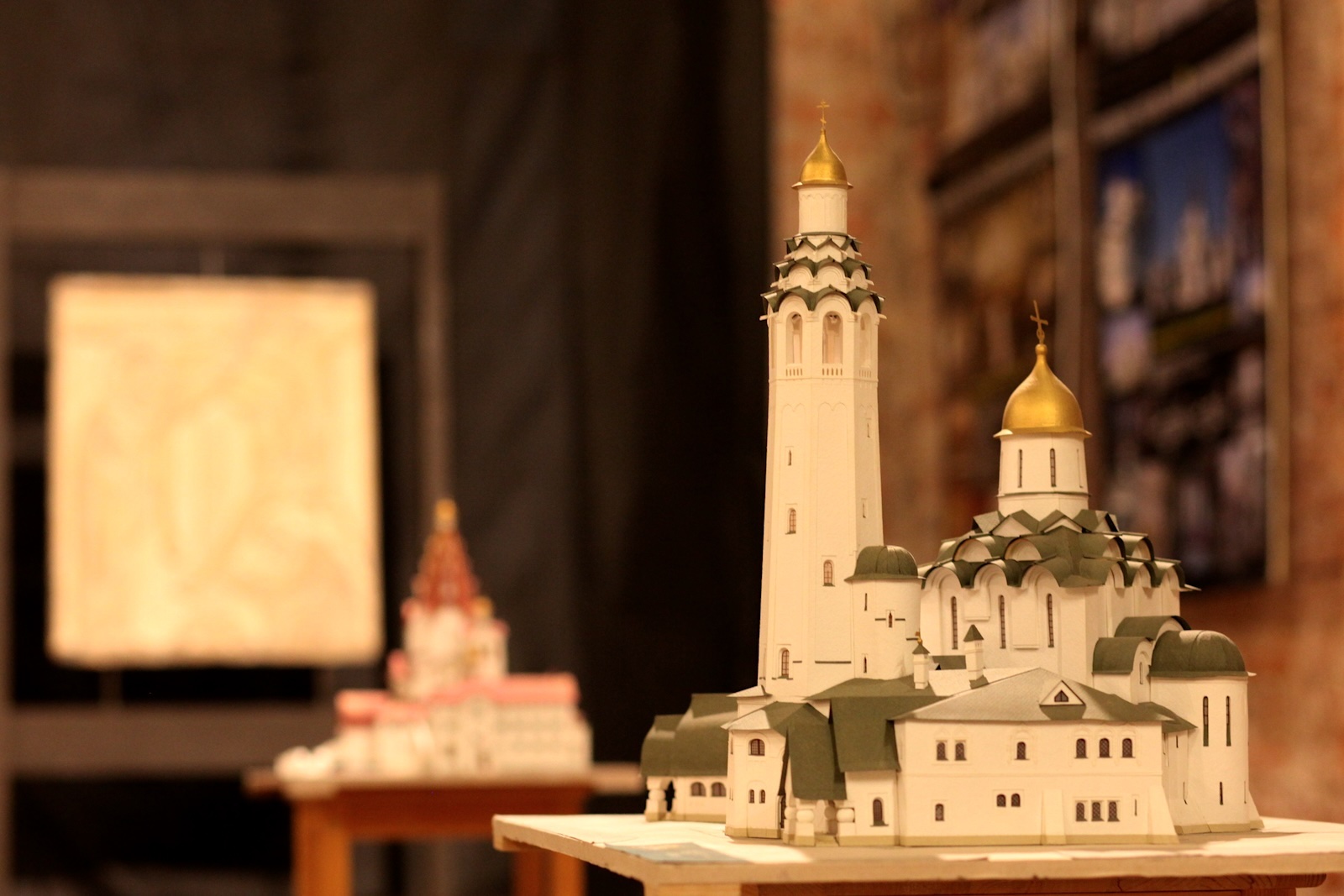
An early project of the newly formed Artos Fellowship, and the source of its name — the almanac The Gifts (Дары) grew out of this exhibition, and the fellowship's exhibition work developed from it. Under the full title The Gifts: Art for Christmas, it set church and secular artists side by side, believers and non-believers, around a single question: what are the gifts a person brings to God. Traditional iconography, fresco, and mosaic met contemporary installation in the Ruina wing of Moscow's Shchusev Museum of Architecture.
- Pravmir — «„Дары“: искусство к Рождеству»
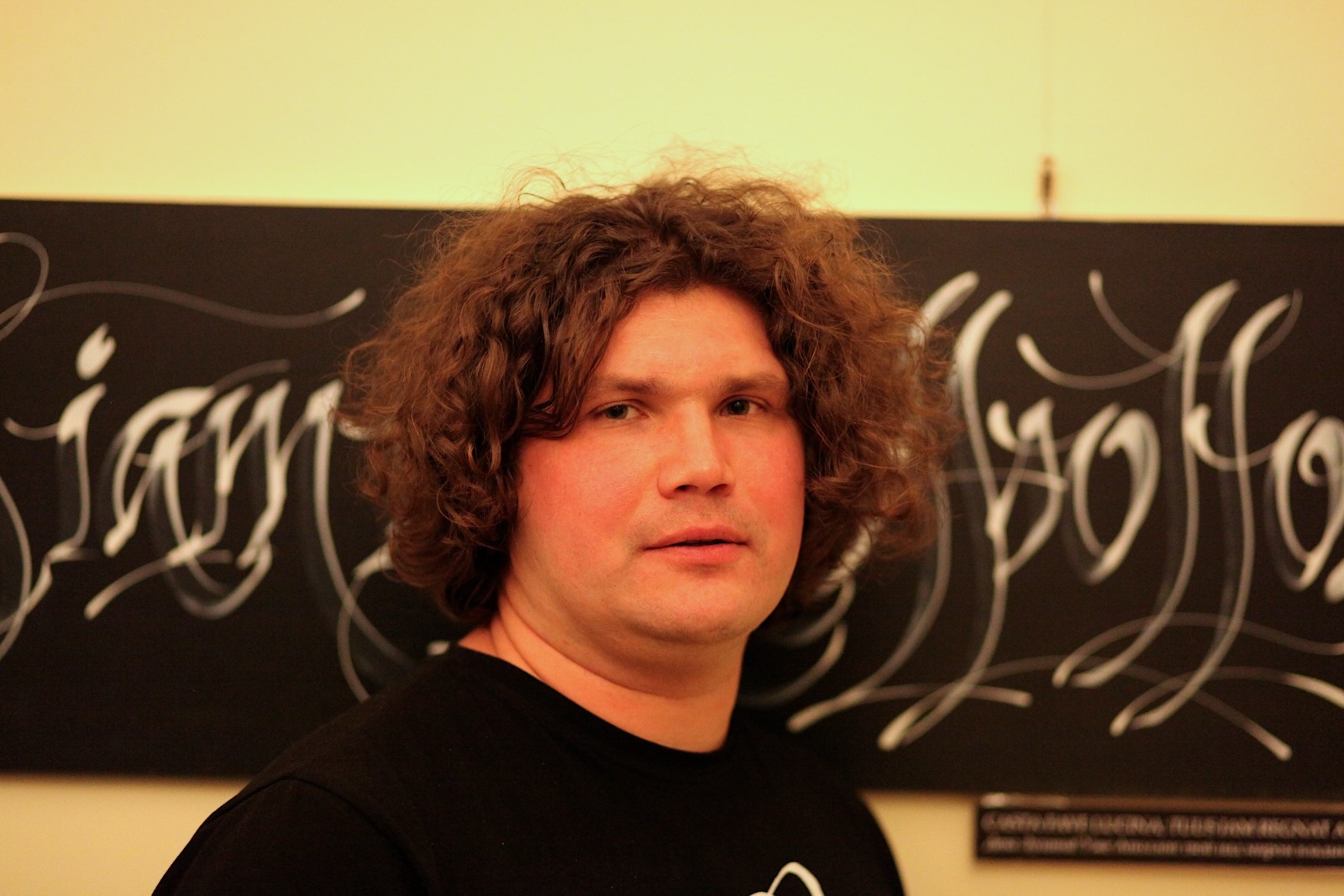
The first project of the Artos Fellowship: calligraphy by Oleksiy Chekal on seven lines from the Fourth Eclogue of Virgil — the verses that Christian readers long took as a pagan foretelling of the birth of Christ.